Flying from Canada to a US Cruise Port: The Complete Logistics Guide
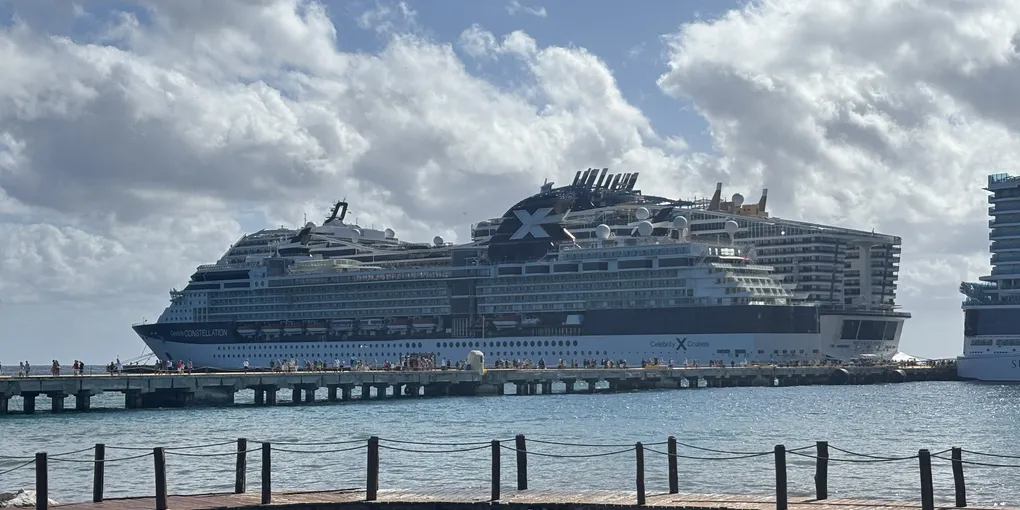
I was already done — Celebrity Constellation trip complete, bags packed, ready to fly home to Ottawa — when a snowstorm parked itself over YOW and cancelled my flight, stranding me at an airport hotel for an unplanned extra night. The cruise itself had gone perfectly. The return leg is what taught me that the flight home deserves as much planning as the flight down, and that Canadians flying to US cruise ports are playing a different logistics game than the American families we’re sharing the pier with.
This is what I’ve learned across five cruises, four of them flown to from Ottawa.
Picking your US embarkation port when you’re flying from Canada
Most Canadian cruise families end up choosing between four US ports: Fort Lauderdale, Miami, Port Canaveral, and Los Angeles. The choice usually comes down to flight options from YOW, YYZ, YYC or YVR, not the port itself.
Fort Lauderdale (FLL) vs. Miami (MIA)
Fort Lauderdale wins most of the time from Eastern Canada, and the reason is boring: FLL is closer to the cruise port than MIA is to its own port, and the airport is smaller and easier to move through with kids. From FLL to Port Everglades is roughly a 15-minute taxi. From MIA to PortMiami is 20–30 minutes in traffic, and Miami traffic has a way of eating your buffer.
Air Canada and Porter both fly YOW and YYZ to FLL direct in the November–April cruise season. Miami has daily flight options but is usually more expensive out of YOW because the direct flight counts are thinner.
Rule I use: if the cruise sails from Port Everglades, fly to FLL. If it sails from Port Miami, I still check FLL first — the 40-minute drive north is often cheaper than paying the Miami premium.
Port Canaveral (MCO)
Port Canaveral is the play if you’re combining a cruise with Walt Disney World, which is exactly what I’m planning for our next family cruise — a few nights at Disney first, then onto Harmony of the Seas from Port Canaveral. The flights come into Orlando (MCO), which is about 45 minutes from the port by rental car or shuttle.
If you’re not doing a Disney land portion, Port Canaveral is usually a weaker choice than Fort Lauderdale from Canada — fewer direct flight options, and the airport-to-port transfer is long enough to matter.
Los Angeles (LAX)
I’ve never sailed from LAX, so this is general knowledge: it makes sense if you’re flying from YVR or YYC and doing a Mexican Riviera or Pacific Coastal itinerary. From YOW or YYZ, the connecting flight time usually cancels out any advantage, and you’d almost always be better off flying to a Florida port.
Should you fly the night before your cruise? (Yes. Here’s the math.)
Fly in the night before. I do not think this is debatable for Canadians flying to a US cruise port in winter.
The same-day risk
If your cruise leaves at 4:00 PM and your flight lands at 11:00 AM, you have five hours of buffer. That sounds like plenty until a winter storm eats your outbound flight, or US customs at Pearson adds 90 minutes, or your bags come off the belt last. The cruise line will not wait for you. Miss the ship and you’re paying for last-minute flights to the first port of call, which on a Caribbean itinerary can run $250 per person in peak season plus missed days on the cruise.
Hotel room math for one adult and two kids
This is the part that almost no US blog covers correctly for my situation. My family is me plus a son (15) and daughter (11). Most cruise-adjacent hotels advertise rooms that sleep four — a king bed or two queens plus a pullout sofa — and price them at $220–$250 USD a night in season.
The question I’ve had to answer more than once: do I book one room with a pullout, or two rooms at roughly double the cost? For a 15-year-old and an 11-year-old who are not the same gender, I lean toward one room with two queens and put my son on the pullout. It’s not perfect, but it’s not the two-room cost either. What I would not do is book a king room and try to fit three of us in one bed and a cot.
Which pre-cruise hotels actually work for families
For Royal Caribbean’s Star of the Seas in October 2025 I stayed at Homewood Suites by Hilton Cape Canaveral-Cocoa Beach in a room with two queen beds for approximately $220 USD. This hotel was clean, comfortable, and only minutes from the port. As an added bonus, if you’re on the north side of the hotel you might wake up to a view of your cruise ship.
For Celebrity’s Constellation (a.k.a. “Connie”) in January 2026 I didn’t have my family with me, but Hotel Alba Tampa, where I stayed, would have worked well for one. A two-queen-bed room runs approximately $230 USD and is a quick 25-minute Uber or taxi from the port. They also offer free pickup from the airport, and there’s a mall 10 minutes away for last-minute pickups.
NEXUS for Canadian cruising families — is it worth it?
The honest answer for me: probably not yet.
NEXUS is a Trusted Traveler program run jointly by Canada and the U.S. You apply online, clear a background check, do a quick in-person interview, and get a card valid for five years. In return, you get dedicated fast lanes at land border crossings and airport security, plus Global Entry kiosks when you land in the U.S. from any international destination. The card costs $120 USD (roughly $165 CAD) for an adult. Kids under 18 are free, as long as a parent applies at the same time.
So for my family — me plus two kids — the total is about $165 CAD for five years. That’s $33 a year for all three of us. On paper, it’s one of the cheapest travel upgrades you can buy.
Here’s the thing: I fly out of Ottawa, which is a small airport. I always arrive early. On the way down to a cruise, I’ve never found security to be the bottleneck. And returning to Canada, I use the ArriveCAN app to pre-clear customs, which already cuts most of the wait. I haven’t actually had a situation where NEXUS would have saved me meaningful time.
That said, there are two scenarios where I think it shifts from “nice to have” to “genuinely useful”:
If you drive across the border regularly. NEXUS lanes at land crossings can cut a 60-minute backup to under five minutes. If you’re doing road trips to New York or shopping runs to Ogdensburg, it pays for itself in one trip.
If you fly through a major hub. Toronto Pearson and Montreal Trudeau have longer, less predictable security lines. If you’re connecting through YYZ, NEXUS and TSA PreCheck-style access add up faster than they do at YOW.
For families at larger airports, or anyone who regularly crosses at land, I’d call it an easy yes. For Ottawa families who fly direct and arrive early: it’s still reasonable value for $33 a year, but don’t expect it to transform your airport experience.
One logistics note if you do apply: kids are free but they still need their own applications and must attend the interview in person.
Airport parking vs. transit from Ottawa and Toronto
This is where the Canadian-specific costs show up that no US cruise blog mentions.
YOW parking for a 7–10 day cruise
At YOW, long-term parking for a 7-night cruise runs roughly $140 CAD. Park’N Fly and similar off-site lots at YOW cost $100 CAD including the shuttle. The off-site lots win on cost but add 20–30 minutes to each end of your travel day.
YYZ parking and off-site lots
Pearson’s own long-term parking is more expensive than YOW’s, and the off-site market is bigger and more competitive. Park’N Fly, Aeropark, and Airpark Parking all quote weekly rates, and the shuttle adds about 15 minutes to each transfer.
Taxi, rideshare, and transit breakeven
For a family of three from central Ottawa to YOW, a taxi or Uber runs $35–50 CAD one way, or $70–100 round trip — potentially cheaper than eight days of airport parking. For central Toronto to YYZ, the UP Express plus rideshare to the station is usually the cheapest option and avoids parking entirely. The breakeven point where parking wins: if your round-trip taxi cost is higher than the parking cost, park. If it’s lower, don’t.
Currency, cards, and tipping at the port
How much USD cash to actually bring
For a 7-night cruise with pre-cruise hotel, I bring roughly $200–250 USD cash per adult — enough to cover hotel tips, the shuttle to the port, the baggage porter at the pier (this one matters — $2 USD per bag is standard and they will remember you if you skip it), and emergency cash at ports of call where cards don’t work. The pre-cruise hotel line item is one of the six categories in my Free Cruise Budget Calculator, and it’s the one that’s surprised me most when I actually track it.
Credit cards that don’t punish you on conversion
I’ll be honest: I don’t carry a no-foreign-transaction-fee card. My everyday credit card charges 2.5% on every USD purchase, and on a cruise with a $2,000 USD onboard bill that’s $50 USD in fees I didn’t shop around to avoid. On five cruises, that’s added up.
If you already know you’ll cruise more than once, the math favours switching. The Scotiabank Passport Visa Infinite is the one most Canadian cruisers I know carry. There are a few others currently available — Rogers Red World Elite Mastercard, Home Trust Preferred Visa, and the Wealthsimple Cash Card — but I haven’t used any of them personally, so I won’t tell you which is best. What I can tell you is what the 2.5% costs you if you don’t switch.
Tipping at the pier, the hotel, and the ship
Cash tips for the hotel bellhop ($1–2 USD per bag), the hotel-to-port shuttle driver ($5 USD), and the pier porter ($2 USD per bag). Onboard gratuities are typically charged automatically to your stateroom — for my three-person family on Royal Caribbean that’s been roughly $517 CAD for seven days, or $24.62 CAD per person per day.
The return trip — customs, cancellations, and why the flight home is the riskier leg
This is the section most cruise blogs skip entirely, and it’s the one I care about most now.
Re-entering Canada with kids
Coming back into Canada with a 15-year-old and an 11-year-old, the CBSA agent will ask who they are to me, how long we were gone, and what we’re bringing back. If you’re a divorced parent, carry a copy of your custody agreement or a signed letter from the other parent consenting to the trip. I have been asked once for it, just to confirm I had one. Without the letter, I suspect that would have been a different conversation.
The Celebrity Constellation snowstorm
This one actually happened. I was on Celebrity Constellation, a solo-with-a-friend trip, disembarked in Tampa Bay, flew back toward Ottawa, and a storm had shut YOW down. Porter rebooked me for the next afternoon, which meant finding a hotel near the Tampa airport along with everyone else impacted by a winter storm across the US and Canada. The hotel room cost me $230 USD. The extra meals cost me $60 USD. The Uber back to the airport the next morning was another $15 USD. Total unplanned cost of the snowstorm: roughly $305 USD for one adult.
For a three-person family, the same scenario would have been closer to $600–800 CAD because I’d have needed a bigger room and three meals instead of one.
Building 24-hour contingency cash into your budget
After that trip I started keeping what I think of as a “stuck overnight” fund — enough cash and credit headroom to cover one unplanned hotel night, three meals, and a cab, for whatever size family is travelling. On my cruise packing list for families, I note which items get moved into the carry-on specifically for this scenario: one change of clothes per person, all medications, toothbrushes, phone chargers. The checked luggage might fly home without you; the carry-on won’t.
Quick-reference checklist: flying from Canada to a US cruise port
- Book flight to arrive the night before the cruise, never same-day
- Book pre-cruise hotel with room configuration that fits your actual family (pullout sofa if you have kids of different genders)
- Apply for NEXUS at least 6 months before your first cruise if flying US regularly
- Compare long-term airport parking vs. taxi round-trip cost for your city
- Bring USD cash for hotel tips, porters, and emergencies ($150–200 USD per adult for a 7-night cruise)
- Use a no-foreign-transaction-fee credit card for all USD charges
- Carry custody agreement or consent letter if divorced/separated
- Pack one change of clothes, all medications, and chargers in carry-on for stuck-overnight scenarios
- Build contingency cash for one unplanned hotel night into your pre-cruise budget
If you’re building your own Canada-to-port plan, the free budget calculator I put together walks you through the six cost categories this kind of trip actually hits — grab it at Free Cruise Budget Calculator.